AI Alone Won’t Transform Your Business: Why the Right People Make the Difference

Imagine a company that invests in various AI tools, hoping to achieve profound operational improvements. Despite its best intentions, the anticipated impact on revenue and efficiency fails to materialize. What’s going wrong?
In today’s B2B environment, a common mistake is to attribute the solution of complex business problems solely to AI tools. The reality is that the focus should not just be on the technology, but on the people who implement and utilize it.
Tools vs. Transformation
Access to powerful AI does not automatically equate to solving specific business problems. The difference lies in people’s ability to translate the informational power gained into valuable, actionable strategies. This is the first step toward successful AI embodiment in business practices.
The Human Advantage
Integrating AI requires a diverse team: Business analysts understand business needs, process experts identify bottlenecks, software engineers develop solutions, data specialists ensure data quality, and leadership plays a crucial role in change management. Each of these individuals brings unique skills that help ensure AI implementations are successful.
Before Implementation
Prior to the introduction of AI, experts must take various steps. They map workflows, pinpoint bottlenecks, define measurable goals, assess data quality, and prioritize the most promising opportunities for deploying AI. These preparatory actions are crucial for a successful implementation.
Turning AI into Systems
Integrating AI into existing systems like CRM and ERP can feel overwhelming for many entrepreneurs. However, it’s about creating clearly defined processes that work seamlessly. This includes automation, security protocols, testing procedures, as well as exception handling and regular maintenance.
Practical Use Cases
Transformation through AI manifests in various use cases. Here are some examples that illustrate the difference between a generic tool and a well-designed workflow:
- Lead qualification: Using AI to automate contact data checks.
- Customer support: Implementing AI-driven chatbots for basic queries.
- Document processing: Utilizing AI for automated data extraction.
- Internal knowledge retrieval: Leveraging AI for improved access to company data.
SME Example
Let's consider a hypothetical service business with 25 employees:
- Before implementation: Traditional customer order processing.
- After implementation: AI-assisted order processing with fewer manual interventions.
People and Adoption
The introduction of new technologies can encounter resistance. It is essential to develop a training strategy that strengthens employee engagement. Feedback loops and human approvals are critical for smooth integration of AI solutions.
Build, Buy, or Combine?
Whether an off-the-shelf AI solution is sufficient or custom integrated systems are needed depends on the specific business situation. Making the right choices here is crucial for long-term success.
Measuring Value
Performance indicators such as time saved, error rates, response speed, customer satisfaction, and total operational costs can serve as indicators of the success of your AI implementation. A transparent ROI calculation can help clearly communicate business benefits.
Implementation Roadmap
A well-structured roadmap for AI implementation includes: assessing needs, designing a pilot, validating results, integrating carefully, training teams, and continuously measuring and improving.
Common Mistakes
Companies often make the mistake of purchasing with a "tool-first" approach, defining unclear responsibilities, utilizing insufficient data, making unrealistic promises, implementing weak governance structures, and ignoring employee needs. These points should be avoided.
Conclusion
In summary, the true potential of AI is unleashed only through the valuable knowledge of individuals who understand the technology and can combine it with business acumen. If you want to learn more about implementing AI solutions, we invite you to connect with Apexiom.
FAQs
What is AI transformation?
AI transformation refers to the comprehensive implementation of AI technologies to enhance business processes and create new value within organizations.
What are AI implementation experts?
AI implementation experts are professionals who assist businesses in applying and integrating AI solutions to realize their overall potential.
What costs are associated with AI implementations?
The costs of AI implementations vary based on scope, complexity, and business requirements. A realistic estimation is crucial.
What internal teams are needed?
Required internal teams include IT administrators, business analysts, and specialized professionals who support the implementation process.
How do I integrate AI into existing systems?
Integrating AI into existing systems requires careful planning, specified APIs, and thorough testing to ensure a seamless user experience.
How do I measure the ROI of AI?
The ROI of AI can be measured through performance indicators such as efficiency gains, cost savings, and revenue increases.
Takeaways
- AI tools alone do not lead to transformation.
- Human expertise is crucial for successful AI projects.
- Thorough analysis is essential before implementation.
- Custom solutions are often more effective than off-the-shelf software.
- Ongoing training and feedback are necessary for acceptance.
"The real challenges of AI transformation are not technical in nature, but human."
The discussion around AI technology implementation is ongoing. We look forward to hearing from you at Apexiom.
More posts
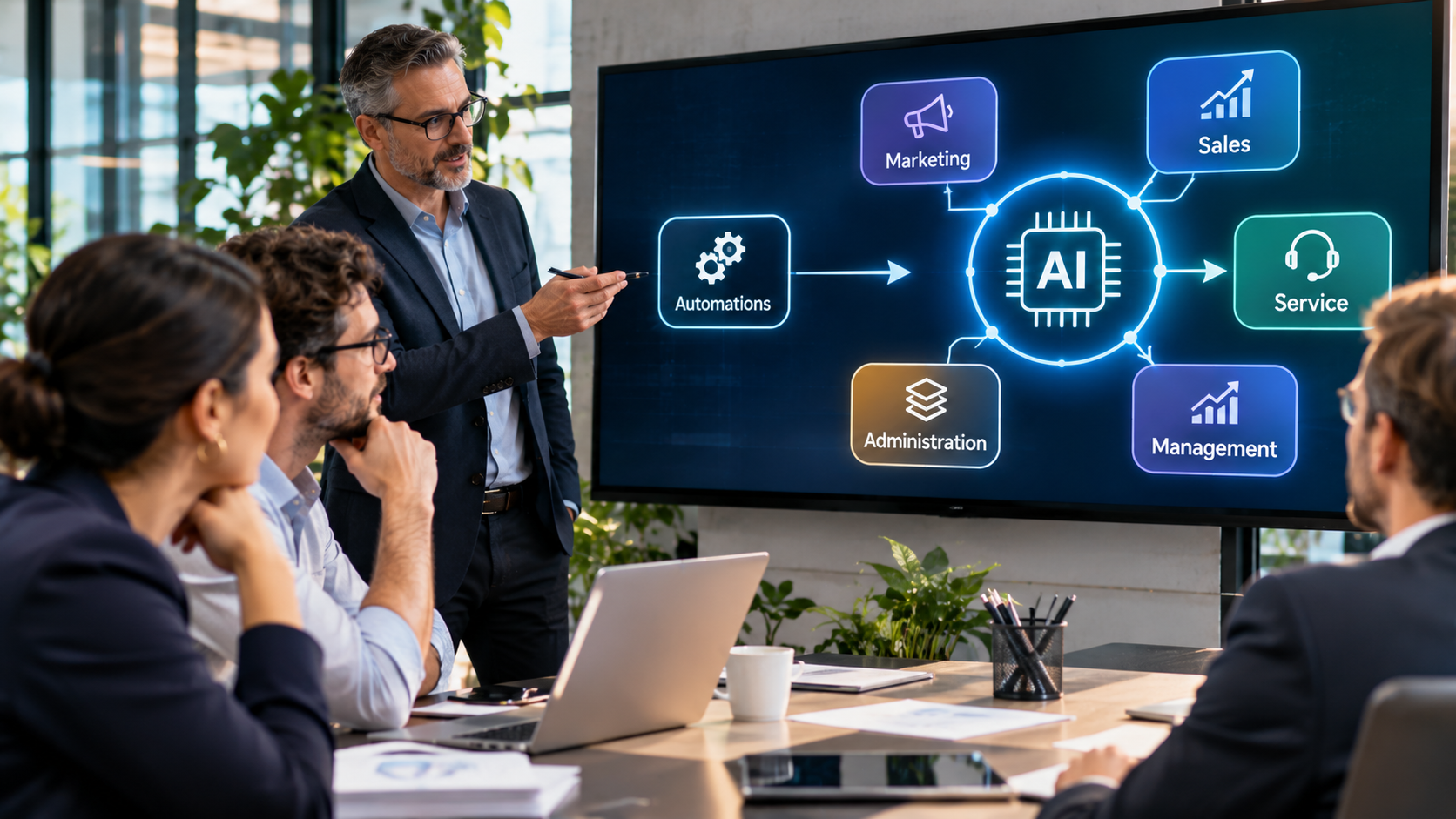 AI & Automation
What Comes After Automation? Building an AI-First Operating Model
November 6, 2026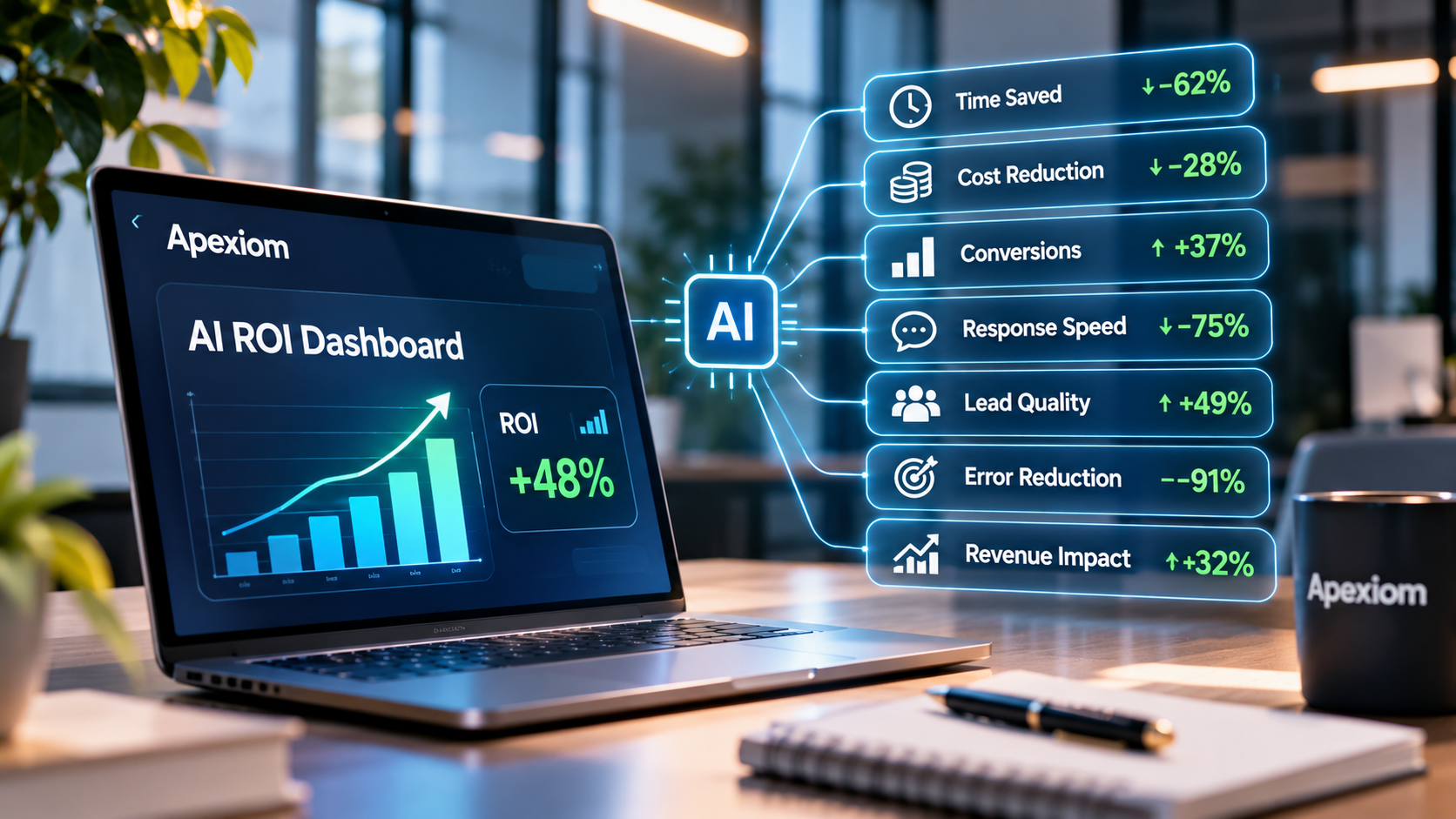 AI & Automation
How to Measure ROI From AI: The KPIs Every Business Should Track
November 4, 2026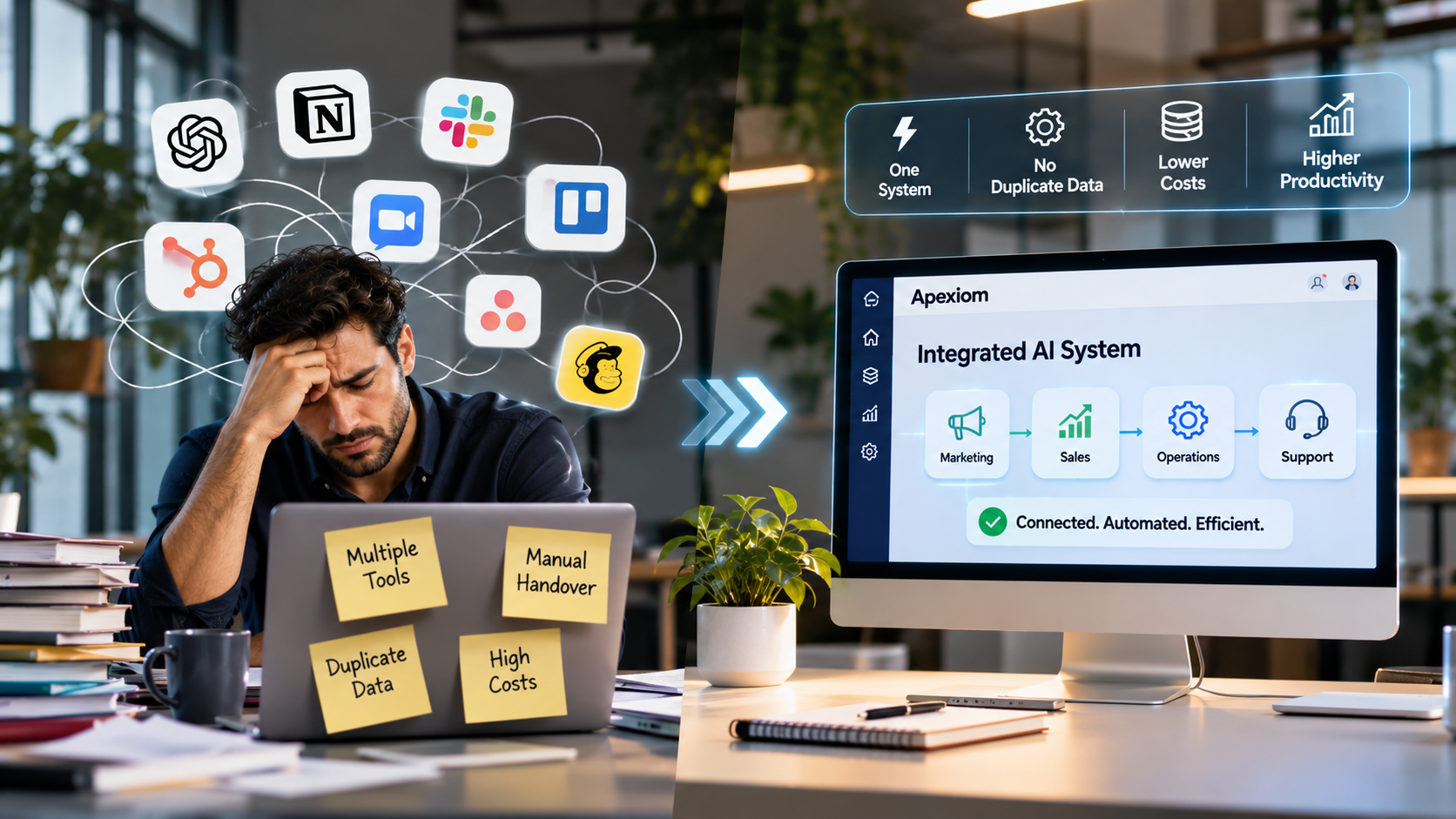 AI & Automation
The AI Tool Stack Problem: Why More AI Tools Do Not Always Mean More Productivity
November 2, 2026
Let’s build your digital future together
From the first idea to measurable success, Apexiom Engineering is your partner for software, AI and sustainable growth. Made in Germany, personal and on equal footing.