From Prompt to Process: How Experts Turn AI Into Real Business Workflows
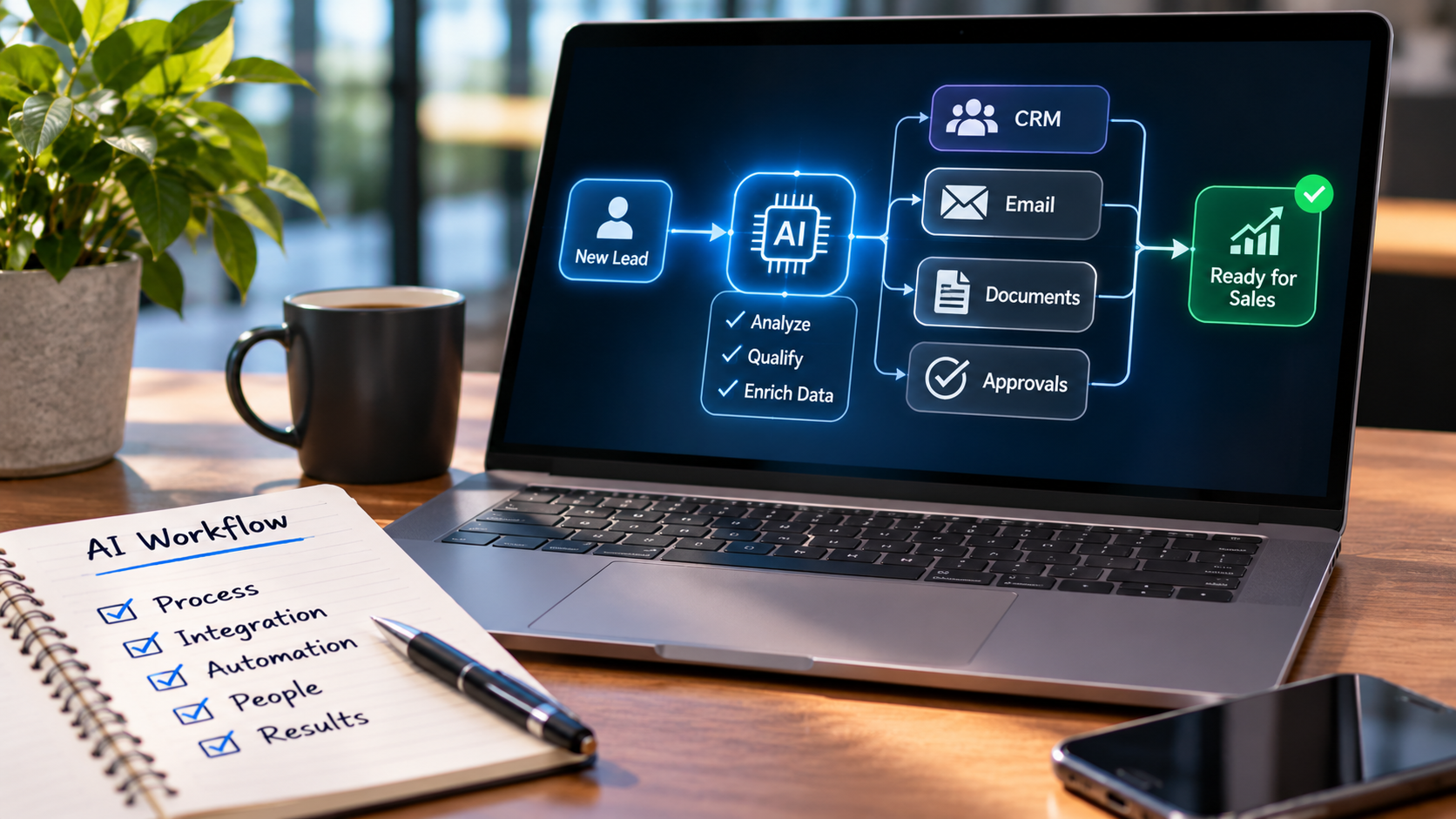
Small and medium-sized enterprises (SMEs) are increasingly leveraging AI tools like ChatGPT to enhance their efficiency. However, many businesses use these tools in isolation, manually transferring information between various systems. This approach often leads to inefficiencies and missed opportunities for automation.
The Dilemma: Prompt vs. Process
A simple prompt to an AI generates an answer, but that does not replace a comprehensive, integrated business process. While individual prompts and simple automations can be helpful, integrating AI into workflows requires careful planning and execution to yield genuine business value.
Components of a Business Workflow
Numerous components play a vital role in building efficient workflows: triggers, data inputs, AI processing, business rules, APIs, approvals, outputs, monitoring, and error handling. These elements allow AI responses to be transformed into actionable business initiatives.
Practical Example: Customer Inquiry
Let's consider a potential customer inquiry. The AI could first qualify this inquiry. The system would then update CRM records, create relevant documents, prepare an associated email, and finally seek employee approval before scheduling a follow-up.
Business Applications
Automation can be applied in various sectors within SMEs, including:
- Lead Management: Effective tracking of prospects.
- Customer Support: Quick responses to inquiries.
- Document Processing: Automated creation and filing.
- Sales Follow-ups: Simplifying and tracking offers.
- Administrative Tasks: Reducing manual interventions.
Why Expert Help Matters
Implementing an effective AI-based workflow requires expertise across multiple areas. Experts conduct thorough process analyses, bring business knowledge, and understand software development and integration.
Tools for Automation
Systems like CRM platforms, email applications, databases, and tools like Zapier and Make significantly support automation. Each of these solutions has specific capabilities designed to enhance efficiency and increase the degree of automation.
Case Study: Hypothetical SME
Consider a hypothetical company with 25 employees. The following table illustrates the differences between manual workflows and AI-supported processes.
Security and Privacy
When implementing automated workflows, it is also crucial to adhere to data protection regulations like GDPR. Considerations such as confidentiality, approvals, human validation, and audit trails play a vital role in a company's privacy strategy.
Return on Investment (ROI)
The investment costs for implementing comprehensive AI workflows must be weighed against long-term savings, time gains, and error reductions. A hypothetical example could facilitate clearer demonstrations of these benefits.
Implementation Roadmap
A successful implementation roadmap includes the following steps:
- Conduct process assessment
- Design workflow sketch
- Conduct pilot testing
- Ensure system integration
- Train employees
- Establish performance monitoring
Common Mistakes
Businesses often make common mistakes when implementing AI-based automation solutions:
- Poor Data Quality: Insufficient data leads to inaccurate results.
- Unnecessary Automation: Over-automation can complicate processes.
- Missing Approvals: Insufficient approvals can lead to compliance issues.
- Unreliable Integrations: Implementations without thorough testing.
- Unclear Responsibilities: Ambiguities can lead to delays.
Conclusion: More Than Just Prompts
Implementing AI requires more than just sending simple prompts. To capitalize on the potential, businesses must adopt comprehensive workflows. Explore customized automation solutions for your business processes with Apexiom!
FAQs About AI Workflows
Here are some frequently asked questions about AI workflows and their implementation.
- What are AI workflow automations? These are automated processes that utilize AI-driven technologies to optimize business operations.
- How is AI integrated into existing systems? Integration is typically achieved through APIs and specialized software.
- What is the cost of implementing AI workflows? Costs vary depending on the scope and complexity of the implementation.
- Why is expert knowledge critical? Experts provide essential insights into process design, integration, and software development.
- How is security ensured? Security concepts involve confidentiality, permissions, and regular audits.
- What benefits do AI-driven workflows provide? They offer time savings, efficiency improvements, and error reduction.
Five Key Takeaways
- AI-powered workflows need more than just prompt generation.
- Integration into existing systems is critical for success.
- Security aspects are a fundamental part of any effective automation.
- The ROI on implementation can be substantial with the right assumptions.
- Practical examples are vital for understanding effectiveness.
Helpful Links
- AIXPLAIN - AI Workflow Automation.
- Zapier - Connecting web apps for automation.
- Make - Visual automation for entrepreneurs.
- CRM Solutions - Understanding CRM platforms.
- GDPR Information - Data protection regulations and compliance.
More posts
 AI & Automation
AI Alone Won’t Transform Your Business: Why the Right People Make the Difference
November 16, 2026 AI & Automation
What Comes After Automation? Building an AI-First Operating Model
November 6, 2026 AI & Automation
How to Measure ROI From AI: The KPIs Every Business Should Track
November 4, 2026
Let’s build your digital future together
From the first idea to measurable success, Apexiom Engineering is your partner for software, AI and sustainable growth. Made in Germany, personal and on equal footing.