What Comes After Automation? Building an AI-First Operating Model
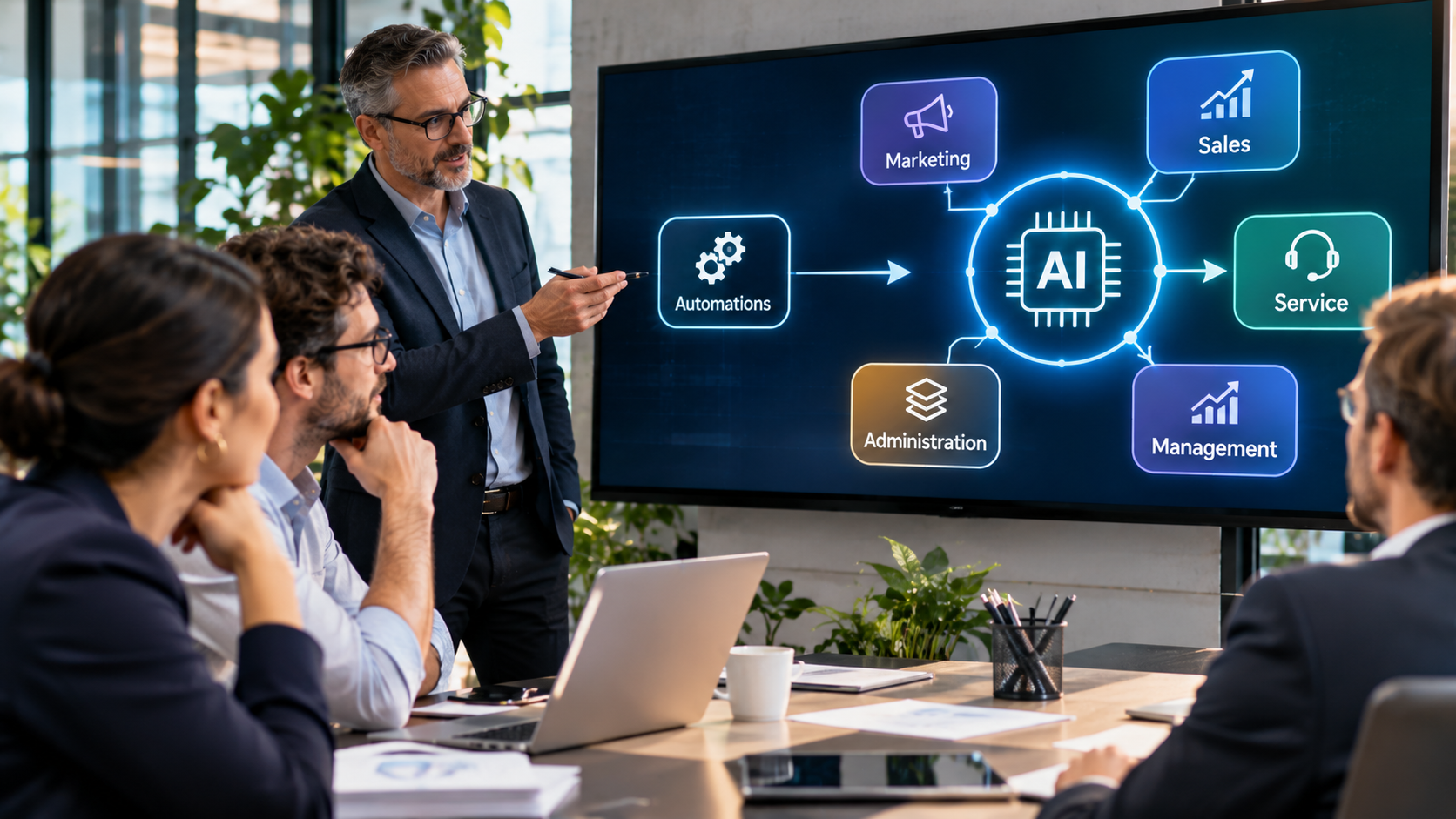
Imagine a small, dynamic company where employees work with various AI tools every day. Despite their efforts, workflows are often characterized by manual handovers, inconsistent information, and inefficient processes. This scenario is common for many small and medium-sized enterprises (SMEs) that have taken the first step into the world of AI — the question is, what comes after automation?
Transitioning to an AI-first operating model is crucial to overcome these challenges. Unlike isolated automations and basic software integrations, an AI-first model aims to connect and optimize all aspects of a business — from marketing and sales to customer service and management.
What is an AI-First Operating Model?
An AI-first operating model defines an approach where AI technologies are integrated into all operational processes of the business. Instead of just implementing point solutions, this model develops a comprehensive strategy for leveraging AI that includes both people and processes. This ensures that all departments can work together seamlessly to achieve a unified goal.
Foundations of the AI-First Model
To establish an effective AI-first operating model, companies need to consider the following fundamentals:
- Process Redesign: Overhauling existing processes to optimize interaction with AI.
- Reliable Data: Ensuring that data is high-quality and accessible.
- Connected Systems: Integrating systems through APIs to ensure smooth operations.
- Clear Ownership: Defining which departments are responsible for specific AI-driven processes.
- AI Capabilities: Ensuring that the team has the necessary skills to utilize AI effectively.
- Human Approvals: Maintaining human oversight at critical phases of the decision-making process.
Practical Applications Across Departments
Implementing an AI-first model shows significant advantages across various departments, including:
- Marketing: Automated campaigns driven by customer data for personalized advertising.
- Sales: Leveraging AI to analyze customer data, enabling better sales forecasting.
- Customer Service: AI chatbots that handle basic customer inquiries, freeing up the support team.
- Administration: Automated invoicing that significantly reduces administrative workload.
- Management: Real-time analytics of business data that support strategic decision-making.
An End-to-End Example
Let’s consider a concrete example: a new customer inquiry goes through several phases, starting from qualification, updating the Customer Relationship Management (CRM), to personalized outreach. In this scenario, the inquiry is fulfilled, and the results are documented in a management report.
How Workflows Change in a Company
Assuming we have a hypothetical service company of 30 employees, we can compare its workflows before and after implementing an AI-first model. The following table illustrates the shift:
- Before Implementation: Fragmented tools and manual reporting.
- After Implementation: Integrated systems with automated reporting.
- Before Implementation: Long response times for customer inquiries.
- After Implementation: Instant responses through AI-assisted customer service.
Governance in an AI-First Model
Robust governance is crucial for the success of AI solutions. The following aspects should be addressed:
- Compliance with GDPR and other data protection regulations.
- Protecting the privacy and security of customer data.
- Training employees on how to use AI tools effectively.
- Access controls to prevent unauthorized access.
- Monitoring and escalation mechanisms for issues.
- Clarifying responsibilities to ensure ownership.
The Business Case for an AI-First Model
The impacts of an AI-first model are substantial. Aspects like time savings, improved response times, and higher customer satisfaction can be quantified to illustrate ROI:
- Reduced lead times for inquiries.
- Increased conversion rates through targeted outreach.
- Lower operational costs due to automation.
- Improved customer satisfaction and loyalty.
Implementation of the AI-First Model
Successful implementation requires a phased approach. The following steps are recommended:
- Audit processes to identify optimization opportunities.
- Prioritize opportunities for easier integration.
- Execute pilot projects to gain early insights.
- Integrate systems and train employees.
- Measure results for continuous improvement.
- Scale solutions across other departments.
Risks of an AI-First Model
Implementing an AI-first model also comes with risks:
- Poor data quality that can impact outcome accuracy.
- Fragmented tools that do not provide consistent data.
- Vulnerability to vendor lock-in.
- Excessive autonomy of AI without human oversight.
- Unclear responsibilities in process organization.
- Resistance to change within the organization.
Outlook and Conclusion
The path to an AI-first operating model leads to numerous new opportunities. It remains essential to be realistic and to distinguish between proven features and emerging possibilities. Start today by exploring solutions from Apexiom and discover how integrated AI models can transform your business.
Conclusion - What Comes Next?
In the scope of digital strategy, it is crucial not only to implement technologies but also to create a holistic operating model that encompasses people, processes, data, and governance.
More posts
 AI & Automation
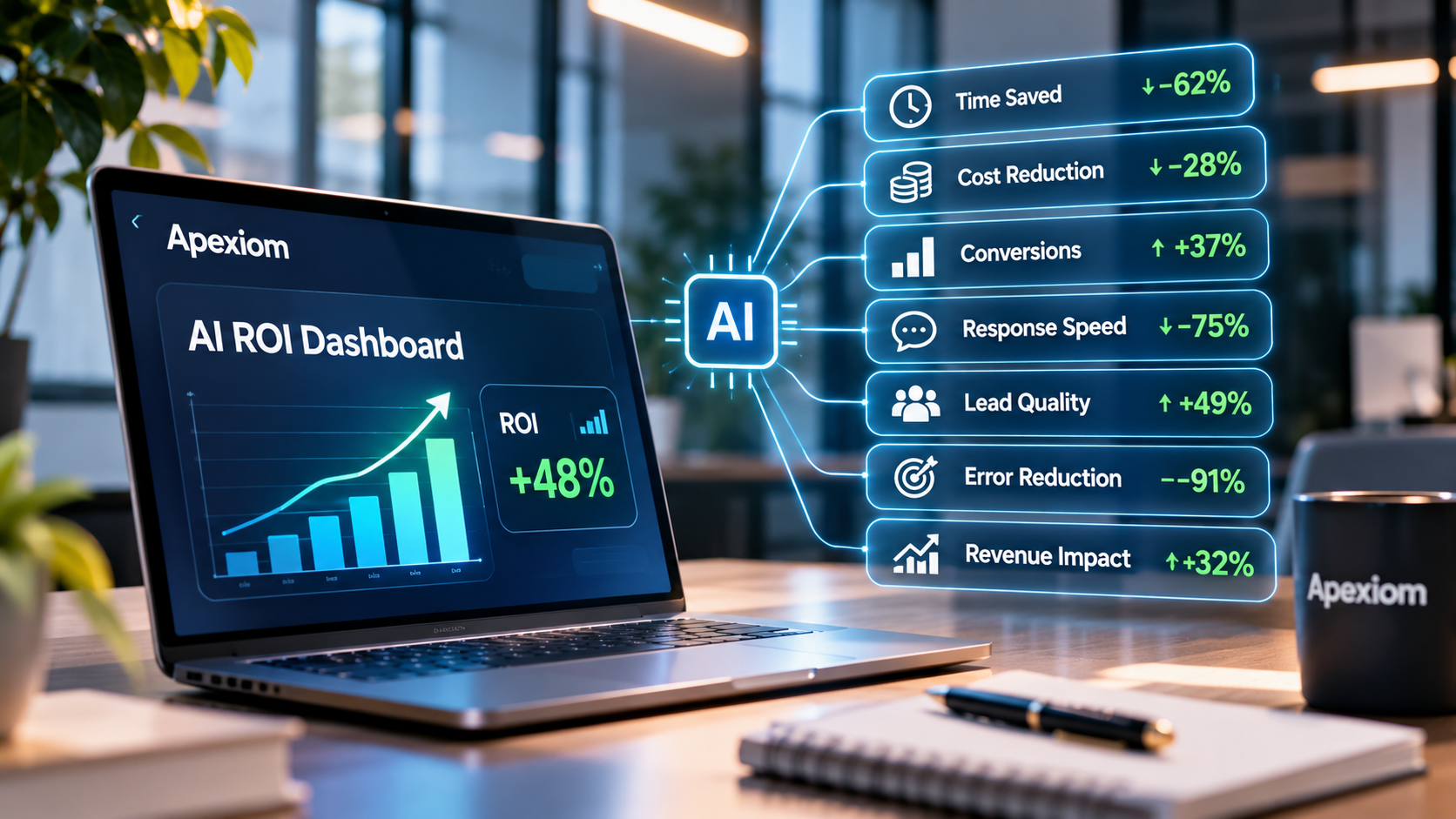
How to Measure ROI From AI: The KPIs Every Business Should Track
November 4, 2026 AI & Automation
The AI Tool Stack Problem: Why More AI Tools Do Not Always Mean More Productivity
November 2, 2026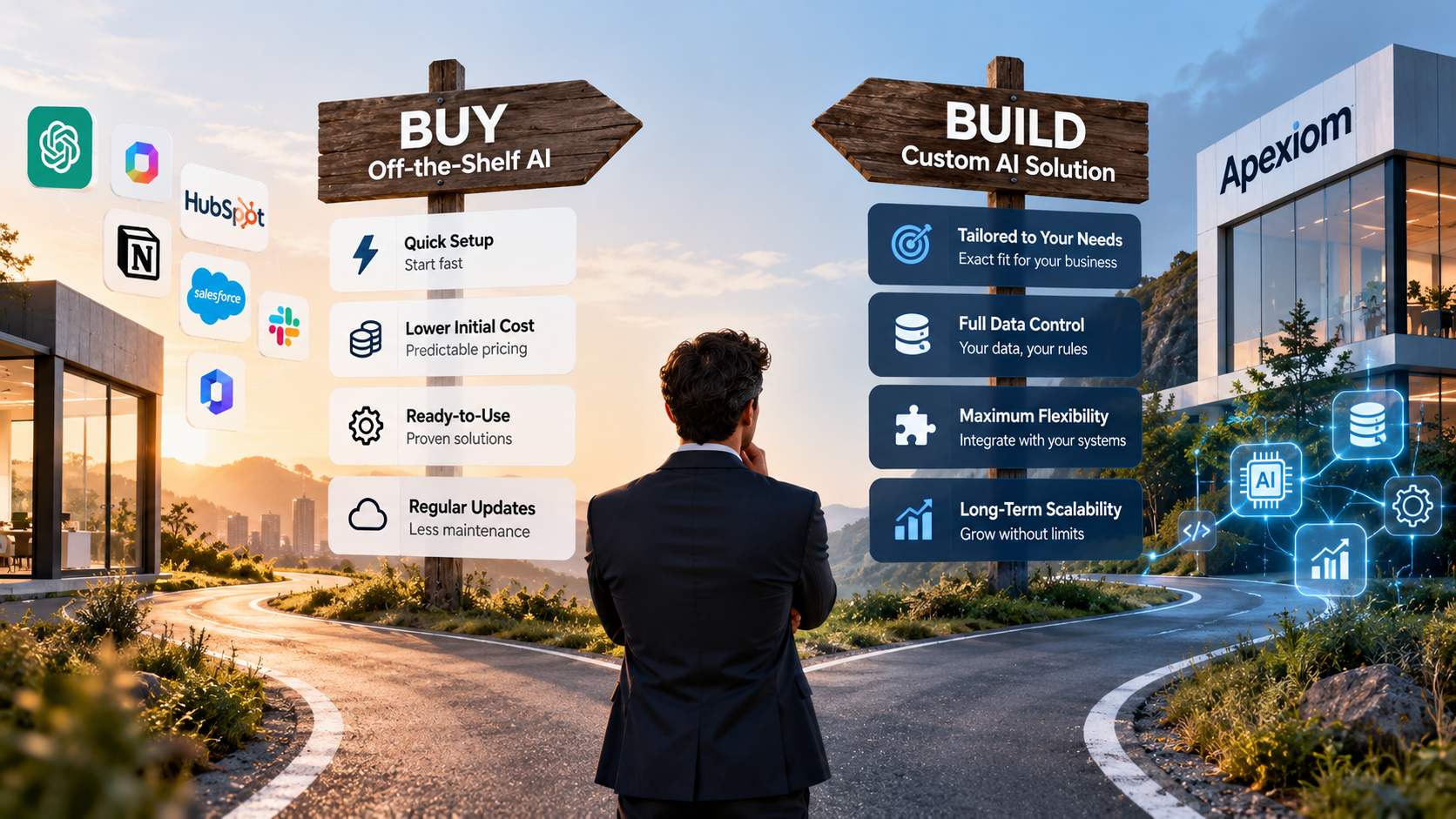 AI & Automation
Build vs. Buy: Should Your Business Use Off-the-Shelf AI or a Custom AI Solution?
October 30, 2026
Let’s build your digital future together
From the first idea to measurable success, Apexiom Engineering is your partner for software, AI and sustainable growth. Made in Germany, personal and on equal footing.